


Introduction
Every growing business eventually reaches a stage where managing operations becomes more complicated than expected. What once worked smoothly with spreadsheets, basic accounting software, and manual tracking slowly begins to create delays, confusion, and errors.
Sales teams may track orders in one system. Finance teams manage accounting somewhere else. Inventory might be updated manually or stored in another tool entirely. Over time, this disconnected approach creates problems that affect the entire organization.
This is where SAP comes in.
SAP helps businesses bring all their operations into one unified system. Finance, sales, purchasing, inventory, production, and reporting can all work together through a single platform. Instead of dealing with scattered data, businesses gain complete visibility into their operations.
However, implementing SAP is not just about installing software. It requires careful planning, technical expertise, process alignment, and ongoing support. That is why many companies rely on best SAP implementation services and professional SAP consulting services to ensure the system is implemented correctly.
For organizations looking to adopt ERP systems, working with experienced SAP implementation services in Oman can make a major difference in how smoothly the transition happens.
Many businesses across the Gulf region also evaluate ERP partners that offer SAP consulting services in Oman, SAP implementation services in Saudi Arabia, SAP consulting services in Saudi Arabia, and ERP implementation services Qatar before choosing the right partner.
Understanding what to expect from the implementation process helps businesses prepare for a successful ERP transformation.
Understanding SAP Implementation
SAP implementation is the process of deploying an SAP system within an organization and configuring it to support the company’s business processes.
This process is usually managed by an experienced SAP implementation partner who provides end-to-end SAP consulting services.
The implementation typically involves several steps such as:
- Analyzing current business processes
- Designing system workflows
- Configuring SAP modules
- Migrating existing data
- Training employees
- Testing the system before launch
- Providing support after deployment
The goal of implementation is not simply to install SAP but to ensure that it aligns perfectly with how the business operates.
Companies searching for SAP consulting services near me or a reliable SAP implementation partner near me often look for partners who can handle the entire ERP lifecycle from planning to post-implementation support.
Why Businesses in Oman Are Adopting SAP
Businesses in Oman are increasingly adopting ERP systems to manage growing operations and improve efficiency. As companies expand, managing finance, inventory, sales, and procurement through separate tools becomes difficult and inefficient.
To streamline operations and support digital transformation, many organizations rely on SAP implementation services in Oman and SAP consulting services in Oman. SAP helps integrate all business functions into a single system, providing real-time insights and better decision-making.
Across the GCC region, companies also explore ERP expertise from hubs offering ERP consulting services Qatar, ERP consulting Dubai, ERP consulting in Sharjah, and ERP consulting Abu Dhabi to build scalable systems that support long-term business growth.
The First Step: Business Process Assessment
One of the first things an SAP implementation partner will do is understand how the business currently operates.
This stage is extremely important because every organization has unique processes, workflows, and operational priorities.
During this phase, consultants from SAP consulting services teams typically analyze:
- Finance and accounting processes
- Sales and customer management
- Procurement and vendor management
- Inventory and warehouse operations
- Production planning
- Reporting and compliance requirements
The objective is to identify inefficiencies and design an SAP system that improves these processes rather than simply replicating existing issues.
Designing the SAP System Architecture
After analyzing the business processes, the next step involves designing how the SAP system will be structured.
This includes defining:
- System modules and configurations
- Organizational hierarchy
- Data structures
- Workflow automation
- User roles and permissions
Many companies across the GCC work with ERP providers offering services such as SAP implementation services in Kuwait, SAP consulting services in Kuwait, and SAP implementation company Sharjah to design robust ERP systems that can support complex business operations.
For example, a manufacturing company may require modules for production planning, materials management, sales, finance, and inventory management.
The implementation team carefully maps the company’s operational needs to SAP’s capabilities to ensure everything functions efficiently.
SAP Business One Implementation Across the GCC
Small and medium-sized businesses often choose SAP Business One, an ERP solution designed for growing companies. It helps manage finance, inventory, sales, and procurement in one integrated system.
Across the GCC region, many businesses implement this solution through certified partners offering services such as SAP Business One implementation Dubai, SAP Business One implementation UAE, SAP Business One consulting UAE, SAP Business One implementation Bahrain, and SAP Business One consulting Bahrain.
These implementations help SMEs streamline operations, improve efficiency, and gain better control over their business processes.
Data Migration and Integration
One of the most critical stages of SAP implementation is migrating existing data from legacy systems into SAP.
Businesses that work with experienced SAP consulting services or ERP consulting Dubai specialists usually follow structured data migration frameworks to ensure accuracy.
This process includes transferring:
- Customer records
- Vendor databases
- Product catalogs
- Financial data
- Historical transactions
- Inventory balances
Many companies also integrate SAP with other systems such as CRM platforms, payroll systems, and logistics tools.
Testing the SAP System
Before the system is launched, thorough testing is required to ensure everything works correctly.
Testing helps identify potential issues before they affect real business operations.
Typical testing phases include:
Unit Testing
Individual modules are tested separately to confirm they function correctly.
Integration Testing
Different modules are tested together to ensure data flows properly between departments.
User Acceptance Testing
Employees who will use the system daily test the workflows and confirm that they meet business requirements.
Testing ensures that when the system goes live, operations can continue without disruption.
Employee Training and Change Management
Technology alone cannot transform a business. Employees must understand how to use the system effectively.
A good SAP implementation partner provides structured training programs for employees across different departments.
Training usually includes:
- Finance system training
- Sales order management
- Procurement processes
- Inventory management workflows
- Reporting and analytics tools
Proper training ensures that the organization can fully benefit from the ERP system.
Benefits of Professional SAP Implementation Services
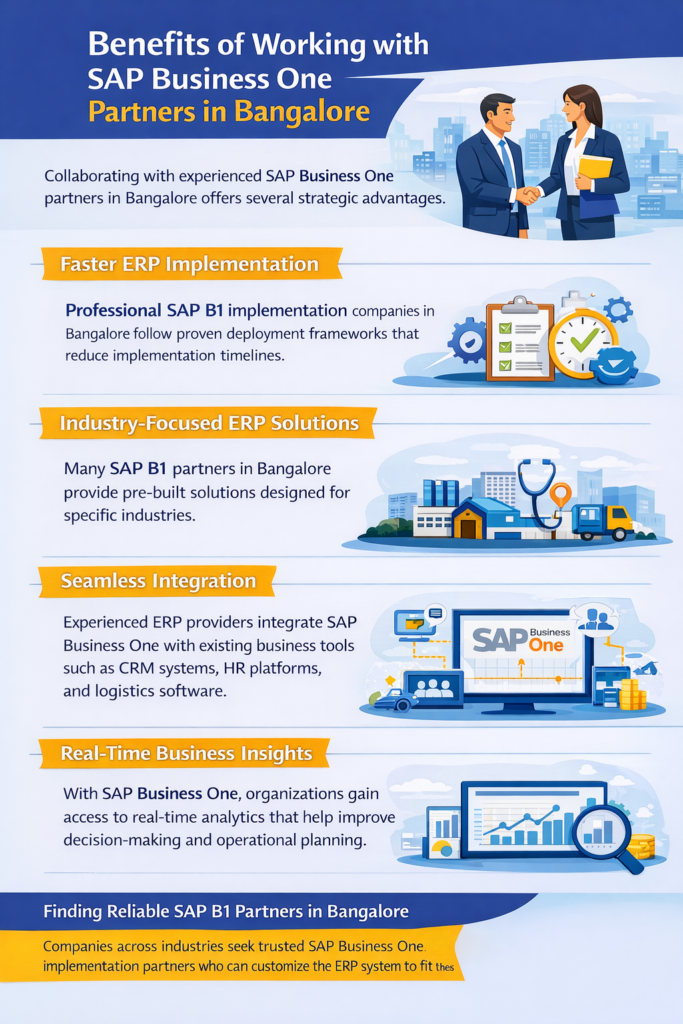
Working with experienced SAP implementation services providers offers several advantages.
Faster Implementation
Professional SAP consulting services follow proven methodologies that reduce implementation timelines.
Lower Risk
Experienced consultants minimize the risk of data loss, system failures, or operational disruptions.
Better Process Alignment
Businesses working with SAP consulting services in Oman benefit from ERP systems that align with real operational workflows.
Scalability
Organizations also benefit from regional ERP expertise from providers offering ERP consulting Abu Dhabi, ERP consulting in Sharjah, and ERP consulting services Qatar.
Improved Reporting
Modern ERP platforms provide real-time dashboards and insights that support better business decision-making.
How to Choose the Right SAP Implementation Partner in Oman
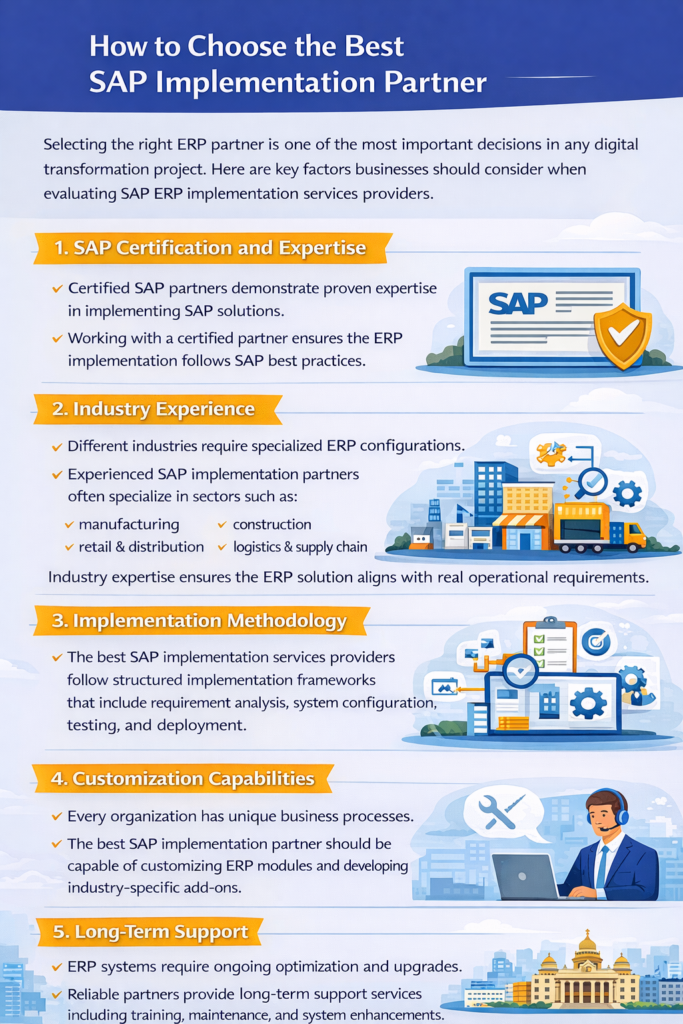
Choosing the right partner is a critical step in any ERP project. Businesses should look for experienced providers offering SAP implementation services in Oman and SAP consulting services in Oman with proven industry expertise.
Many companies also evaluate regional experience in areas such as SAP implementation services in Saudi Arabia, SAP consulting services in Saudi Arabia, and SAP implementation services in Kuwait.
Organizations often search for SAP consulting services near me or a trusted SAP implementation partner near me to find reliable ERP experts. The right partner should have certified SAP consultants, strong industry knowledge, and dependable post-implementation support.
Conclusion
SAP implementation is a major step for any organization. When done correctly, it can transform how businesses manage operations, analyze data, and make strategic decisions.
Companies across the Middle East are investing heavily in ERP systems to improve operational efficiency and support digital transformation.
Whether businesses are exploring SAP implementation services in Oman, SAP ERP implementation Abu Dhabi, SAP Business One implementation UAE, or ERP consulting Dubai, choosing the right ERP partner plays a crucial role in the success of the project.
With the support of experienced SAP consulting services and a reliable SAP implementation partner, organizations can unlock the full potential of SAP and build a strong digital foundation for long-term growth.
Frequently Asked Questions About SAP Implementation Services
What are SAP implementation services?
SAP implementation services involve deploying and configuring an SAP system within a business to manage operations such as finance, sales, procurement, inventory, and reporting. The process includes system design, data migration, configuration, testing, employee training, and post-implementation support.
These services ensure that the SAP system aligns with the organization’s processes and improves operational efficiency.
What does an SAP implementation consultant do?
An SAP implementation consultant analyzes business processes and helps configure the SAP system according to the organization’s requirements.
Their responsibilities typically include:
- Understanding business workflows
- Designing system architecture
- Configuring SAP modules
- Migrating existing data
- Testing the system
- Training employees
They ensure the system works smoothly and supports business operations effectively.
What is SAP S/4HANA implementation?
SAP S/4HANA implementation is the process of deploying the modern SAP ERP platform designed to run on the HANA in-memory database.
This implementation helps businesses benefit from:
- real-time analytics
- faster reporting
- simplified data structures
- improved automation
- better decision-making capabilities
Many organizations adopt SAP S/4HANA as part of their digital transformation strategy.
How long does SAP implementation take?
The duration of SAP implementation depends on several factors, including:
- company size
- number of SAP modules required
- complexity of business processes
- data migration requirements
Small and medium businesses may complete implementation within a few months, while large enterprises with complex operations may require longer timelines.
What industries benefit from SAP implementation services?
SAP implementation services support a wide range of industries including:
- manufacturing
- retail and distribution
- logistics and supply chain
- construction
- healthcare
- professional services
These industries rely on integrated systems to manage complex operations and large volumes of data.
What are SAP consulting and implementation services?
SAP consulting and implementation services combine strategic advisory with technical deployment.
Consultants help businesses:
- evaluate ERP requirements
- design system architecture
- implement SAP modules
- optimize workflows
- improve operational efficiency
This approach ensures that SAP systems deliver real business value rather than just functioning as software tools.
What is SAP Concur implementation?
SAP Concur implementation involves deploying the SAP Concur platform for managing travel, expense reporting, and employee reimbursements.
It helps organizations automate expense management, improve compliance, and gain better visibility into travel spending.
Why should businesses work with professional SAP implementation partners?
Professional SAP implementation partners bring specialized expertise that reduces risks and ensures a successful deployment.
They provide:
- proven implementation methodologies
- certified SAP consultants
- industry experience
- faster project delivery
- reliable post-implementation support
Working with experienced partners ensures that the ERP system is optimized for long-term business growth.

