


sap business one ai integration finance operations are becoming more complex as organizations manage growing transaction volumes, multi-entity accounting structures, digital payment ecosystems, and increasing compliance requirements. Traditional financial workflows that once depended heavily on manual processing are no longer efficient enough to support modern operational demands.
Finance teams are now expected to deliver:
- Faster reporting
- Better forecasting
- Accurate reconciliation
- Real-time financial visibility
- Fraud prevention
- Improved operational efficiency
At the same time, organizations must manage financial data flowing through ERP systems, banking platforms, procurement applications, customer transactions, and payment gateways.
Artificial intelligence is helping businesses improve these financial operations significantly.
Modern AI capabilities integrated into SAP S/4HANA and SAP Business One help automate financial workflows, improve reporting accuracy, reduce manual effort, and strengthen operational control.
Among the most important AI-driven finance capabilities are:
- Cash application automation
- Fraud detection
- Predictive accounting
When combined together inside ERP environments, these technologies create a more intelligent finance ecosystem capable of improving visibility, accuracy, and financial decision-making.
The Role of ERP Systems in sap business one ai integration Finance Automation
Modern finance automation depends heavily on ERP systems capable of integrating accounting, procurement, inventory, analytics, and operational workflows into a centralized environment.
Organizations investing in ERP modernization often require support through:
- SAP application management services
- SAP ERP licensing services
- ERP consulting and implementation
- cloud infrastructure planning
- system migration support
Businesses working with an experienced ERP software company in Chennai or an established ERP solution provider in Chennai are increasingly adopting AI-driven ERP environments to improve operational efficiency and financial visibility.
Many organizations also implement cloud-based ERP infrastructure to improve accessibility and scalability. The growing adoption of Cloud ERP solution in Chennai environments reflects the increasing demand for flexible and centralized enterprise systems.
Specialized ERP consulting services in Chennai also help organizations optimize finance workflows, automate reporting, and improve long-term ERP performance.
Understanding AI in SAP Finance Operations
AI in finance uses machine learning, automation engines, predictive analytics, and intelligent algorithms to improve financial processes.
Inside SAP environments, AI supports functions such as:
- Payment reconciliation
- Invoice matching
- Expense classification
- Fraud monitoring
- Financial forecasting
- Risk analysis
- Cash flow predictions
- Journal recommendations
Instead of relying entirely on manual review, AI systems analyze patterns, identify anomalies, and automate repetitive finance activities.
This improves both operational efficiency and financial intelligence.
What Is Cash Application Automation?
Cash application is the process of matching incoming payments with customer invoices.
Traditionally, finance teams manually:
- Verify payments
- Match invoices
- Resolve discrepancies
- Track partial payments
- Update ERP records
As transaction volumes increase, manual cash application becomes difficult to manage efficiently.
Organizations processing large numbers of payments often face:
- Delayed reconciliation
- Incorrect invoice matching
- Outstanding receivables
- Reduced cash visibility
- Customer disputes
AI-powered automation improves this process significantly.
How AI Improves Cash Application
AI-driven cash application systems use machine learning models to identify payment patterns and automatically match payments with invoices.
The system evaluates:
- Customer payment history
- Invoice references
- Transaction values
- Banking information
- Historical settlement behavior
AI systems can even identify probable matches when payment details are incomplete or inconsistent.
This reduces manual effort while improving reconciliation accuracy and receivables visibility.
Organizations using intelligent SAP environments increasingly integrate automation tools such as SAP B1 bots and workflow automation capabilities to streamline repetitive finance operations further.
SAP Business One and Intelligent ERP Environments
Organizations using sap business one ai integration increasingly adopt AI and automation features to improve financial management, inventory operations, and enterprise reporting.
Many businesses deploy cloud-hosted ERP environments through SAP B1 hosting solutions to improve scalability and centralized access. Cloud adoption is also expanding rapidly across the Middle East, particularly through SAP B1 cloud UAE environments that support remote operations and multi-location business management.
Some organizations continue using SAP B1 on premise Dubai deployments where greater infrastructure control or industry-specific compliance is required.
Modern SAP ecosystems also support:
- Mobile ERP access
- Web-based ERP operations
- Add-on integrations
- Workflow automation
- AI-driven reporting
These capabilities help finance teams improve productivity and operational visibility.
Fraud Risks Continue Increasing
As digital financial ecosystems expand, fraud risks continue growing.
Organizations now face risks such as:
- Unauthorized transactions
- Invoice fraud
- Duplicate payments
- Vendor manipulation
- Expense fraud
- Insider threats
Traditional fraud detection methods often rely heavily on manual review and static rules.
AI-driven fraud monitoring provides a more intelligent approach.
How AI Fraud Detection Works
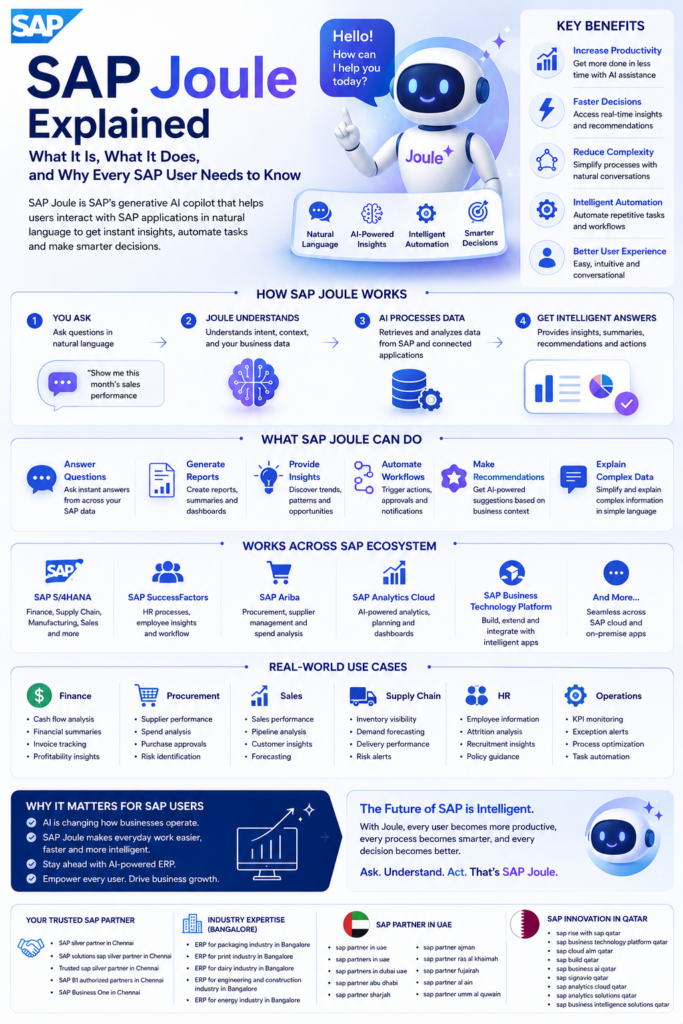
AI fraud detection systems continuously analyze financial activity to identify unusual behavior.
Machine learning models monitor:
- Transaction patterns
- User activity
- Payment frequency
- Geographic anomalies
- Timing inconsistencies
- Vendor behavior
Instead of relying only on predefined rules, AI systems learn from historical financial data and improve detection accuracy continuously.
This enables organizations to identify suspicious activities faster and reduce financial risk.
Businesses operating SAP environments also rely on ongoing support services such as SAP incident management UAE and SAP Basis support UAE to maintain system stability, monitor infrastructure, and reduce operational risks.
Predictive Accounting Improves Financial Planning
Traditional accounting focuses mainly on historical reporting.
Predictive accounting introduces a forward-looking approach using AI-driven forecasting models.
These systems analyze:
- Historical financial data
- Revenue trends
- Payment cycles
- Expense behavior
- Operational patterns
- Customer transactions
to forecast future financial outcomes.
This helps organizations improve budgeting accuracy, cash flow planning, and strategic decision-making.
Industry-Specific ERP Environments Improve Operational Efficiency
Different industries require specialized ERP workflows based on operational requirements.
For example:
- Packaging companies require production tracking and inventory visibility
- Print businesses need job costing and workflow automation
- Dairy operations depend on batch tracking and supply chain monitoring
- Engineering and construction companies require project costing and procurement control
- Energy companies need asset monitoring and operational analytics
This is why organizations increasingly adopt industry-focused ERP environments designed specifically for sectors such as packaging, print, dairy, engineering, construction, and energy operations.
AI integrated into these ERP systems improves forecasting, production planning, procurement visibility, and finance automation.
How Cash Application, Fraud Detection, and Predictive Accounting Work Together
These AI capabilities become far more effective when integrated together inside ERP environments.
Cash Application Improves Financial Accuracy
Automated reconciliation keeps receivables updated in real time.
Fraud Detection Protects Financial Integrity
AI continuously monitors transactions for suspicious activity.
Predictive Accounting Improves Future Visibility
Forecasting models help finance leaders anticipate upcoming financial conditions and operational risks.
Together, these technologies improve:
- Financial visibility
- Operational efficiency
- Risk management
- Cash flow planning
- Compliance monitoring
- Decision-making
This creates a more intelligent and connected finance ecosystem.
SAP Business One Services Support Enterprise Growth
Organizations across regions such as Abu Dhabi increasingly modernize operations using SAP Business One environments.
Businesses often require support for:
- SAP Business One licensing services Abu Dhabi
- migration planning
- CRM integration
- inventory and distribution management
- accounting and financial automation
These services help organizations improve operational visibility, automate finance processes, and strengthen ERP performance across multiple departments.
Real-Time Visibility Improves Financial Control
One major advantage of AI-powered ERP systems is real-time operational visibility.
Organizations can monitor:
- Incoming payments
- Outstanding receivables
- Fraud alerts
- Cash flow trends
- Financial forecasts
- Reporting metrics
without relying entirely on delayed reporting cycles.
This improves financial control and operational responsiveness.
AI Reduces Manual Finance Work
Finance teams often spend significant time handling repetitive activities such as:
- Payment matching
- Spreadsheet reconciliation
- Manual reporting
- Data validation
- Transaction reviews
AI automation reduces manual workloads significantly.
This allows finance professionals to focus more on:
- Strategic planning
- Financial analysis
- Risk management
- Business forecasting
- Operational optimization
The finance function becomes more strategic rather than purely transactional.
Intelligent Forecasting Supports Scalability
As businesses grow, financial complexity increases.
Organizations require stronger forecasting capabilities to manage:
- Multi-entity accounting
- Cross-border payments
- Large transaction volumes
- Expansion planning
- Liquidity management
Predictive accounting helps businesses forecast future financial conditions more accurately while supporting scalable operations.
AI Supports Compliance and Audit Readiness
Compliance remains a major concern for finance teams.
AI systems improve governance through:
- Automated monitoring
- Transaction traceability
- Anomaly detection
- Intelligent reporting
- Continuous auditing support
This improves transparency while simplifying compliance management.
ERP and AI Integration Improve Operational Efficiency
ERP systems remain central to enterprise finance operations.
AI integrated directly into ERP environments creates a unified financial ecosystem where:
- Transactions update automatically
- Financial data synchronizes in real time
- Intelligent recommendations improve workflows
- Reporting becomes faster and more accurate
This reduces operational fragmentation and improves efficiency across finance departments.
The Future of Finance Is Intelligent Automation
Finance operations are becoming increasingly data-driven and automated.
Organizations now expect:
- Real-time reporting
- Automated reconciliation
- Intelligent forecasting
- AI-powered analytics
- Continuous fraud monitoring
- Faster financial closing cycles
AI is becoming a core part of enterprise finance infrastructure rather than an optional enhancement.
Conclusion
Finance operations are evolving far beyond traditional manual accounting processes.
Organizations managing growing transaction volumes and increasingly complex financial ecosystems require faster, smarter, and more intelligent finance environments.
AI-powered capabilities inside SAP systems are transforming finance operations through:
- Automated cash application
- Intelligent fraud detection
- Predictive accounting
- Real-time analytics
- ERP-driven automation
When these capabilities work together, organizations gain:
- Better financial visibility
- Faster reconciliation
- Improved fraud prevention
- Stronger forecasting accuracy
- Better operational control
- Smarter financial decision-making
Combined with modern ERP infrastructure, cloud deployment models, sap business one ai integration, SAP support services, and intelligent automation, finance teams can operate with greater efficiency, scalability, and financial accuracy.
The future of enterprise finance is no longer focused only on recording historical data.
It is increasingly focused on predicting, protecting, and optimizing financial operations through AI-driven ERP ecosystems.
