


Rather than replacing entire workflows, an AI copilot for business works alongside employees within the tools they already use — offering suggestions, drafting content, and surfacing relevant information exactly when it’s needed.
An AI copilot development company builds assistants trained on your workflows, not generic chat.
This “assist, don’t replace” approach has made copilots one of the fastest-adopted forms of enterprise AI across finance, sales, and operations teams.
This guide explains AI copilot for business, covering how it works, key use cases, implementation considerations, and what businesses should evaluate before getting started.
What Makes an AI Copilot Different?
AI copilot development company: Key Considerations
AI copilot development company enables enterprise teams to make faster, data-driven decisions. Organizations implementing ai copilot development company report significant efficiency gains and reduced manual effort.
Unlike a general enterprise AI assistant that users actively query, a copilot is often embedded directly into a specific application or workflow, offering contextual help proactively as work happens.
This is an area where implementation details matter as much as the underlying technology. The difference between a successful deployment and a stalled pilot often comes down to how well the solution is scoped, integrated, and supported after launch.
Common AI Copilot Use Cases in Business
Copilots are being adopted across a range of business functions.
This is an area where implementation details matter as much as the underlying technology. The difference between a successful deployment and a stalled pilot often comes down to how well the solution is scoped, integrated, and supported after launch.
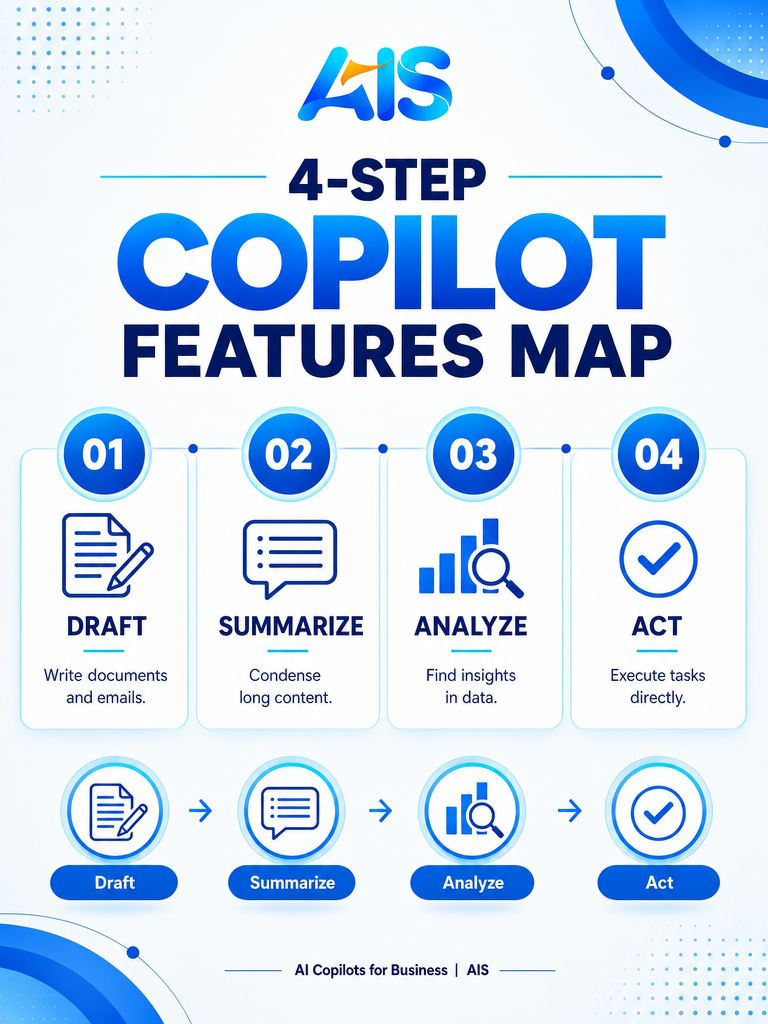
- Sales copilots that draft follow-up emails and summarize call notes.
- Finance copilots that flag anomalies while reviewing reports.
- HR copilots that assist with job descriptions and policy questions.
- Operations copilots that suggest scheduling or resourcing adjustments.
AI Copilot vs AI Executive Assistant for Business
While an AI executive assistant for business often focuses on summarizing information for leadership, a copilot is typically used by individual contributors embedded within their daily tools, offering more granular, task-level assistance.
This is an area where implementation details matter as much as the underlying technology. The difference between a successful deployment and a stalled pilot often comes down to how well the solution is scoped, integrated, and supported after launch.
Working With an AI Copilot Development Company
Building an effective copilot requires more than adding a chat window to existing software. An experienced AI copilot development company designs the copilot to understand context from the specific tool it’s embedded in.
This is an area where implementation details matter as much as the underlying technology. The difference between a successful deployment and a stalled pilot often comes down to how well the solution is scoped, integrated, and supported after launch.
- Understanding what screen or record the user is currently viewing.
- Suggesting relevant next actions based on that context.
- Drafting content using company-specific tone and data.
- Learning from user acceptance or rejection of suggestions over time.
Getting Started With an AI Copilot for Business
Organizations typically start with one high-friction task within a specific role, refine the copilot’s suggestions based on real feedback, and then expand to additional roles or tools.
This is an area where implementation details matter as much as the underlying technology. The difference between a successful deployment and a stalled pilot often comes down to how well the solution is scoped, integrated, and supported after launch.
Measuring the Business Impact of AI copilot for business
Before starting an implementation, it helps to define what success will actually look like — otherwise it becomes difficult to judge whether the investment paid off once the system is live.
Common metrics organizations track include time saved per week on the target process, reduction in manual errors, and faster turnaround on the specific workflow being automated or analyzed. Where applicable, teams also track direct cost savings from reduced headcount needs or avoided losses (such as fewer missed reorders or late payment reminders).
A simple way to frame this is: measure the baseline (how the process works today, including time spent and error rates), implement the solution for a defined pilot period, then measure the same metrics again. The delta between the two gives a concrete, defensible picture of the return on investment — far more convincing internally than anecdotal impressions alone.
What Internal Teams Need to Be Involved
For related approaches, see our guide on AI agents vs AI assistants.
Successful adoption of AI copilot for business rarely rests on IT alone. The most effective implementations typically involve a small, cross-functional group from the outset.
- IT or a technical partner to handle integration and security.
- A business process owner who understands the day-to-day workflow being changed.
- End users who will actually interact with the system, providing early feedback.
- A executive sponsor who can help prioritize the initiative and remove organizational roadblocks.
A Practical Readiness Checklist Before Adopting AI Copilots for Business
It’s also worth reviewing how this compares with enterprise AI assistants when scoping your rollout.
Before committing budget and time to AI copilot for business, it helps to honestly assess organizational readiness. The following checklist reflects questions worth answering internally first.
- Is there a specific, measurable business problem this is meant to solve, rather than a vague goal of “using more AI”?
- Is the relevant business data accessible, reasonably clean, and available through an API, database, or export?
- Is there a clear owner internally who will champion the initiative past the initial pilot phase?
- Has leadership agreed on what level of AI autonomy is acceptable for this use case, and what should always require human approval?
- Is there a realistic timeline and budget that accounts for integration work, not just the AI component itself?
Where This Is Heading
The pace of change in enterprise AI capability remains fast, and AI copilot for business is likely to keep evolving over the next several years rather than settling into a fixed set of features.
Businesses that build a foundation now — clean data access, clear governance policies, and internal familiarity with how AI fits into daily workflows — will generally find it easier to adopt newer capabilities as they mature. Organizations starting from scratch each time tend to face a steeper climb.
Rather than waiting for a “perfect” version of the technology, most organizations find more value in starting with a well-scoped, achievable use case today and building organizational capability incrementally alongside the technology’s own evolution.
Where AI copilot for business Creates the Most Value
While every business can benefit from AI copilot for business, certain industries and organizational profiles tend to see faster or more pronounced results.
Manufacturing and Distribution
Manufacturers and distributors dealing with complex inventory, multi-location operations, and supplier coordination often see some of the fastest returns from AI copilot for business. These businesses generate large volumes of transactional data that benefit from faster, more automated handling.
Professional Services and Consulting
Service-based businesses use AI copilot for business to reduce time spent on administrative tasks, freeing billable staff to focus on client-facing work rather than internal reporting and coordination.
Retail and Wholesale Distribution
Retail and wholesale businesses managing high transaction volumes and thin margins benefit from AI copilot for business through faster decision cycles, reduced manual reconciliation, and earlier visibility into performance shifts.
Mid-Size Enterprises Running SAP or Similar ERP Platforms
Mid-size enterprises already running SAP Business One are well positioned to adopt AI copilot for business, since the underlying transactional data needed already exists within their systems.
Common Mistakes to Avoid
Organizations adopting AI copilot for business sometimes run into avoidable setbacks. Being aware of these common mistakes upfront can save significant time and rework.
- Starting too broad — attempting to apply AI copilot for business across every department at once instead of proving value with one well-scoped use case first.
- Underestimating data quality issues — AI copilot for business depends on accurate, accessible underlying data, and poor data hygiene undermines results regardless of how capable the AI is.
- Skipping governance and access control planning until after deployment, rather than designing it in from the start.
- Choosing a vendor based on demos alone, without verifying real integration experience with your specific systems.
- Failing to define what success looks like before starting, making it difficult to measure the actual impact of AI copilot for business later.
How AIS Business Corp Approaches This
AIS Business Corp works with organizations to implement AI copilot for business in a way that fits their existing technology environment rather than requiring disruptive replacement of systems already in place. This typically starts with a structured discovery phase to understand current workflows, data sources, and pain points, followed by a focused pilot on one well-defined use case. Rather than treating AI copilot for business as a one-time project, AIS Business Corp emphasizes iterative refinement — monitoring real usage, gathering feedback from the teams actually using the system, and adjusting scope, automation boundaries, and integrations accordingly. This approach reduces risk while still allowing businesses to expand capability steadily once initial value is proven, which is especially important for organizations exploring ai copilots for business: how enterprise teams can work smarter with ai for the first time.
Related Resources
AI copilots complement broader enterprise AI assistants and automation across the business.
- Explore Enterprise AI Assistants.
- AI Agents vs AI Assistants.
- Enterprise AI Solutions: 10 Ways Businesses Can Transform with AI.
Frequently Asked Questions
What is an AI copilot for business?
An AI copilot for business is an AI system embedded within a specific tool or workflow that offers contextual suggestions and assistance as employees work.
How is a copilot different from an enterprise AI assistant?
A copilot is typically embedded within a specific application offering proactive, task-level help, while an enterprise AI assistant is more often queried directly for broader information needs.
What does an AI copilot development company do?
An AI copilot development company designs and builds copilots that understand context within a specific tool and offer relevant, actionable suggestions.
Which teams benefit most from AI copilots?
Sales, finance, HR, and operations teams commonly benefit from copilots that reduce time spent on drafting, reviewing, and routine decision-making.
Conclusion
AI copilots offer a practical, low-friction way to bring AI assistance directly into existing workflows without requiring employees to change how they work. Businesses that start with a focused, high-value use case tend to see the fastest adoption and clearest returns.
Talk to an AIS Business Corp specialist to explore how AI copilot for business can be tailored to your organization’s systems, data, and workflows.
You can also explore more implementation guides on the AIS Business Corp blog.
Related resource: IBM on generative AI in business on ibm.com.
AI copilot development company: Quick Answers
Ananthi reads your live ERP data and answers in plain English, with reports and charts generated on demand and exports available in one click.
