

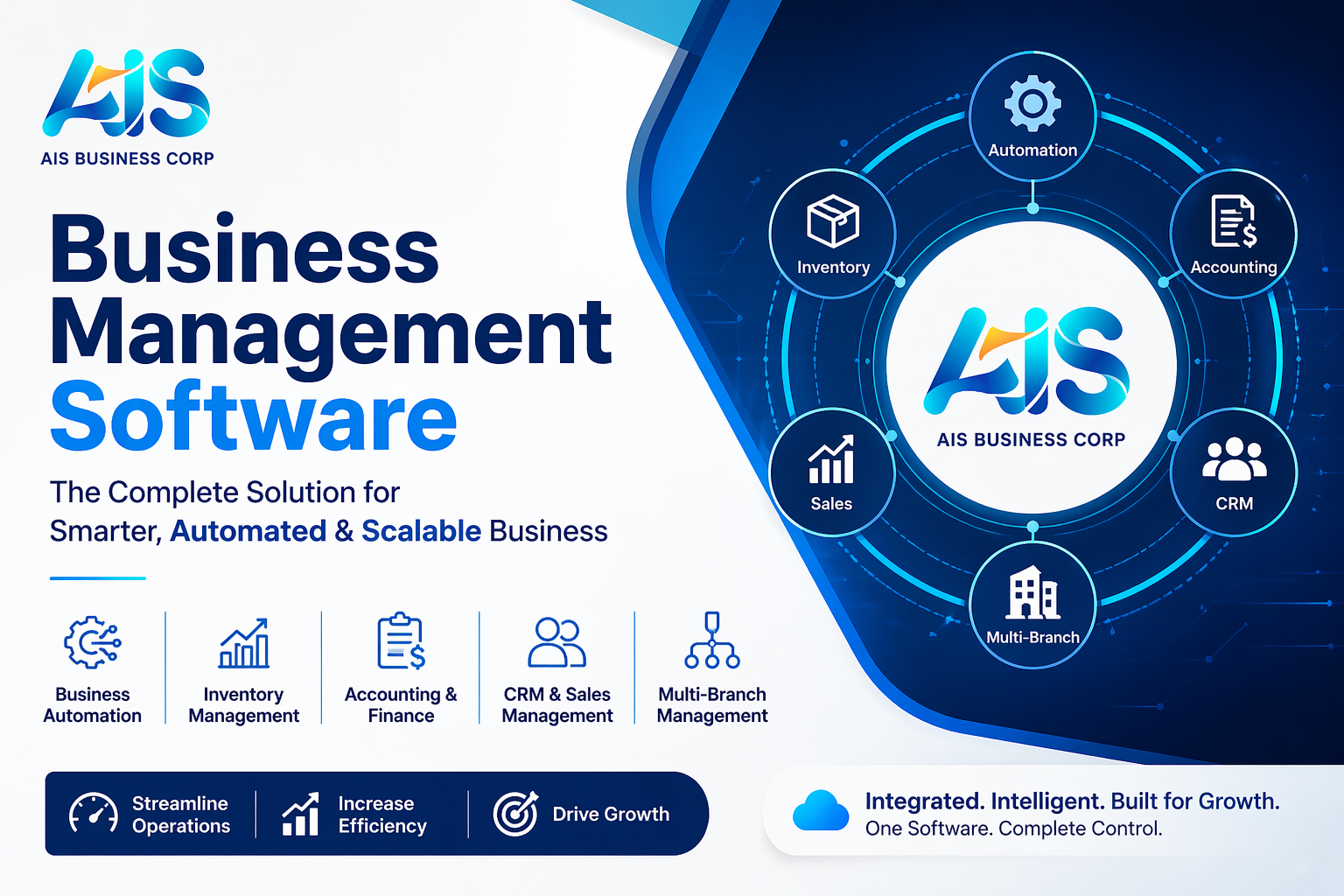
Why Business Software is No Longer Optional?
In today’s fast-paced digital economy, businesses are under constant pressure to operate efficiently, reduce costs, and scale faster. Whether you are a startup, a growing company, or a large enterprise, managing operations manually or using disconnected tools is no longer sustainable.
This is where business management software becomes essential. It provides a centralized system to manage all core business processes from accounting and inventory to sales, customer relationships, and automation.
Companies that adopt modern enterprise business software gain a significant competitive advantage by improving productivity, reducing errors, and making data-driven decisions.
What is Business Management Software?
Business management software is a comprehensive digital solution designed to manage and automate various business operations within a single platform.
It acts as a centralized business software system that integrates multiple functions such as:
- Accounting and finance
- Inventory and stock management
- Sales and CRM
- Procurement and supply chain
- Reporting and analytics
Instead of using multiple standalone tools, businesses can use a single integrated business software to streamline operations and improve efficiency.
Key Components of a Business Software Solution
1. Accounting and Financial Management Software
Financial management is the backbone of any business. A powerful system includes:
- GST billing software
- Invoicing software
- Expense tracking
- Financial reporting
- Tax compliance
This ensures accurate financial data and helps businesses maintain a reliable company accounting system.
2. Inventory Management Software
Efficient inventory management is crucial for operational success. Features include:
- Real-time stock tracking
- Warehouse management software
- Material management software
- Purchase and supply tracking
An advanced inventory tracking system helps avoid stockouts and overstocking.
3. Sales and Customer Management (CRM)
Sales management software helps businesses:
- Track leads and opportunities
- Manage customer interactions
- Monitor sales performance
- Improve conversion rates
A robust CRM software for business enhances customer satisfaction and retention.
4. Order and Dealer Management
Businesses dealing with distributors and dealers require:
- Order management software
- Dealer management systems
- Sales tracking software
These tools streamline order processing and improve supply chain efficiency.
5. Business Automation Software
Automation is one of the most powerful features of modern systems.
Business process automation software helps:
- Reduce manual work
- Automate repetitive tasks
- Improve operational speed
- Minimize human errors
Automation is critical for scaling businesses efficiently.
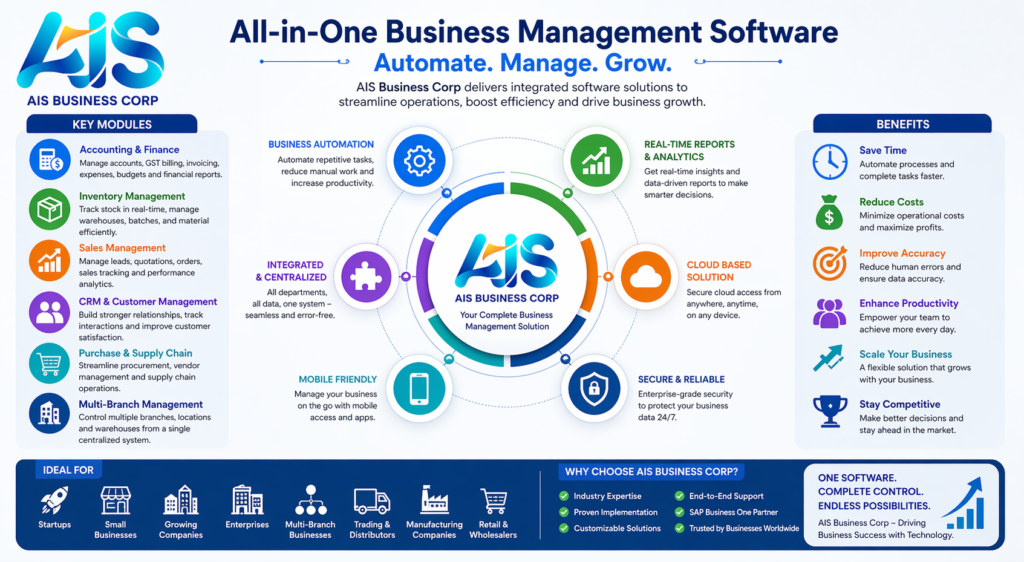
Why Businesses Need Enterprise Software?
1. To Manage Operations Efficiently
Manual processes lead to inefficiencies and errors. A structured business operations software ensures smooth workflows.
2. To Manage Multiple Branches
Growing businesses often struggle with multi-location operations.
A management software for companies provides:
- Centralized control
- Real-time data across branches
- Standardized processes
3. To Improve Decision-Making
Modern systems provide real-time analytics and reports, enabling data-driven decisions.
4. To Reduce Costs
Automation reduces labor costs and operational inefficiencies.
5. To Scale Business Growth
A scalable enterprise management system supports business expansion without complexity.
How to Manage Inventory Efficiently Using Software?
Inventory challenges are common across industries. Businesses often face:
- Stock shortages
- Overstocking
- Inaccurate tracking
Using inventory management software, companies can:
- Track stock in real-time
- Automate reorder levels
- Monitor warehouse movement
- Optimize supply chain
This leads to improved efficiency and reduced losses.
How to Manage Multiple Branches Effectively?
Managing multiple branches manually can be chaotic.
A centralized company software system allows businesses to:
- Monitor all branches from one dashboard
- Track performance metrics
- Standardize operations
- Ensure data consistency
This is especially useful for retail chains and franchises.
Business Automation: The Future of Operations
What is Business Automation Software?
Business automation software is designed to automate repetitive and manual tasks across departments.
Examples of Automation in Business
- Automated invoicing and billing
- Sales pipeline automation
- Inventory alerts and restocking
- Financial report generation
Benefits of Automation
- Saves time
- Reduces human error
- Improves productivity
- Enhances accuracy
Automation is essential for businesses aiming to scale quickly.
Software Solutions for Different Business Sizes
1. Software for Startups
Startups need simple and affordable solutions that include:
- Cloud-based access
- Basic accounting
- CRM features
2. Software for Small Businesses
Small businesses require:
- Accounting and inventory integration
- Billing and invoicing
- Sales tracking
3. Software for Medium Companies
Growing businesses need:
- Multi-branch management
- Automation features
- Advanced reporting
4. Enterprise Software for Large Companies
Enterprises require:
- Full-scale ERP systems
- Custom workflows
- Advanced analytics
- Integration capabilities
Cloud vs On-Premise Business Software
Cloud Software for Small Business
- Accessible from anywhere
- Lower upfront cost
- Automatic updates
On-Premise Software
- More control
- Higher initial investment
- Requires IT infrastructure
Cloud solutions are becoming the preferred choice for modern businesses.
Features of the Best Business Management Software
To choose the right solution, look for:
- Scalability
- User-friendly interface
- Real-time reporting
- Integration capabilities
- Customization options
- Strong security
The top enterprise software should align with your business goals.
Integrated Business Software vs Standalone Tools
Standalone Tools Problems
- Data silos
- Lack of integration
- Inefficiency
Integrated Software Benefits
- Centralized data
- Seamless workflow
- Better collaboration
An integrated business software is essential for operational efficiency.
Industry Use Cases of Business Software
Manufacturing
- Material management
- Production tracking
- Inventory control
Retail
- Billing software
- Stock management
- Customer tracking
Trading & Distribution
- Order management
- Dealer tracking
- Supply chain optimization
How to Choose the Right Business Software Solution?
Ask these questions:
- Does it fit my business size?
- Can it scale with growth?
- Does it support automation?
- Is it cloud-based?
- Does it integrate with existing tools?
Choosing the right system is critical for long-term success.
Future Trends in Enterprise Software
- AI-powered automation
- Predictive analytics
- Cloud-first solutions
- Mobile-based management
- Real-time data processing
Businesses adopting these trends will stay ahead in the market.
Why AIS Business Corp is the Right Partner?
AIS Business Corp is a trusted SAP partner offering advanced business software solutions tailored for different industries.
They specialize in:
- SAP Business One implementation
- Business automation solutions
- Cloud-based ERP systems
- Industry-specific customization
Their expertise helps businesses streamline operations and achieve sustainable growth.
Business management software is no longer a luxury; it’s a necessity. From managing daily operations to enabling large-scale growth, the right software can transform how businesses function.
Whether you need software for small business, a business system for startups, or a full enterprise management system, investing in the right solution will drive efficiency, automation, and success.
FAQs
What is business management software?
It is a centralized system used to manage and automate business operations like accounting, inventory, and sales.
What is the best business management software?
The best software depends on your business needs, but integrated ERP solutions are ideal for scalability.
How can I automate business operations?
You can use business automation software to automate tasks like billing, reporting, and workflow management.
What software is best for small businesses?
Cloud-based software with accounting and CRM features is best for small businesses.
How to manage inventory efficiently?
Using inventory management software helps track stock, automate reorders, and reduce losses.
Can one software manage all business operations?
Yes, integrated business software or ERP systems can manage all operations in one platform.
What is enterprise software?
Enterprise software is designed for large organizations to manage complex operations and processes.
What is business automation software?
It automates repetitive tasks to improve efficiency and reduce manual work.
Is cloud software better than traditional software?
Yes, cloud software offers flexibility, scalability, and remote access.
Why is integrated software important?
It eliminates data silos and improves overall business efficiency.
