


UAE e-invoicing real estate compliance is becoming a critical requirement for property developers, brokers, leasing companies, and real estate management firms across the United Arab Emirates. As the country accelerates digital tax transformation, businesses involved in property transactions must adopt UAE e-invoice real estate frameworks that align with Federal Tax Authority (FTA) reporting standards.
From Dubai’s booming property market to the expanding real estate ecosystems in Abu Dhabi, Sharjah, Ajman, Ras Al Khaimah, Fujairah, and Umm Al Quwain, real estate companies are preparing their financial systems for UAE e-invoicing for real estate operations. Digital invoicing is not just about compliance; it is about automation, transparency, audit readiness, and seamless financial integration.
For developers, property management companies, and brokerage firms handling high-value real estate transactions, implementing real estate e-invoicing UAE solutions ensures that invoice data flows securely between accounting systems and the national e-invoicing network.
This article explores how UAE e-invoicing real estate systems work, the architecture behind them, compliance requirements, and how organizations can implement scalable digital invoicing strategies for property transactions across all emirates and free zones.
Why UAE Real Estate Companies Must Prepare for E-Invoicing?
The UAE government is implementing a nationwide e-invoicing ecosystem to digitize tax reporting and improve transaction transparency. For the real estate industry, this transformation is particularly important because property businesses handle:
- High-value transactions
- Multiple parties in a single deal
- Long-term leasing invoices
- Commission payments to brokers
- Property service charges and maintenance billing
Implementing UAE e-invoicing for real estate companies helps streamline these complex financial processes while ensuring FTA-compliant documentation.
Key Benefits of Real Estate E-Invoicing in UAE
| Benefit | Impact on Real Estate Businesses |
| Automated invoice generation | Faster billing for property sales and leases |
| FTA compliance | Reduces tax audit risks |
| Digital reporting | Transparent financial tracking |
| Reduced manual errors | Accurate VAT reporting |
| Faster reconciliation | Simplifies property transaction accounting |
As property markets grow in Dubai and Abu Dhabi, digital compliance systems become essential for large real estate portfolios.
How UAE E-Invoicing Works for Real Estate Transactions?
The UAE e-invoice real estate ecosystem connects businesses to a structured digital network where invoices are validated, reported, and stored electronically.
The process typically involves three key components.
1. Invoice Generation
Real estate companies generate invoices through ERP or accounting systems when transactions occur, such as:
- Property sales
- Lease agreements
- Broker commissions
- Property management fees
- Service charges
2. Compliance Validation
Invoices are validated through the UAE digital invoicing framework, ensuring that mandatory tax fields are included.
3. Secure Reporting
Validated invoices are transmitted through secure channels to regulatory systems for monitoring and compliance.
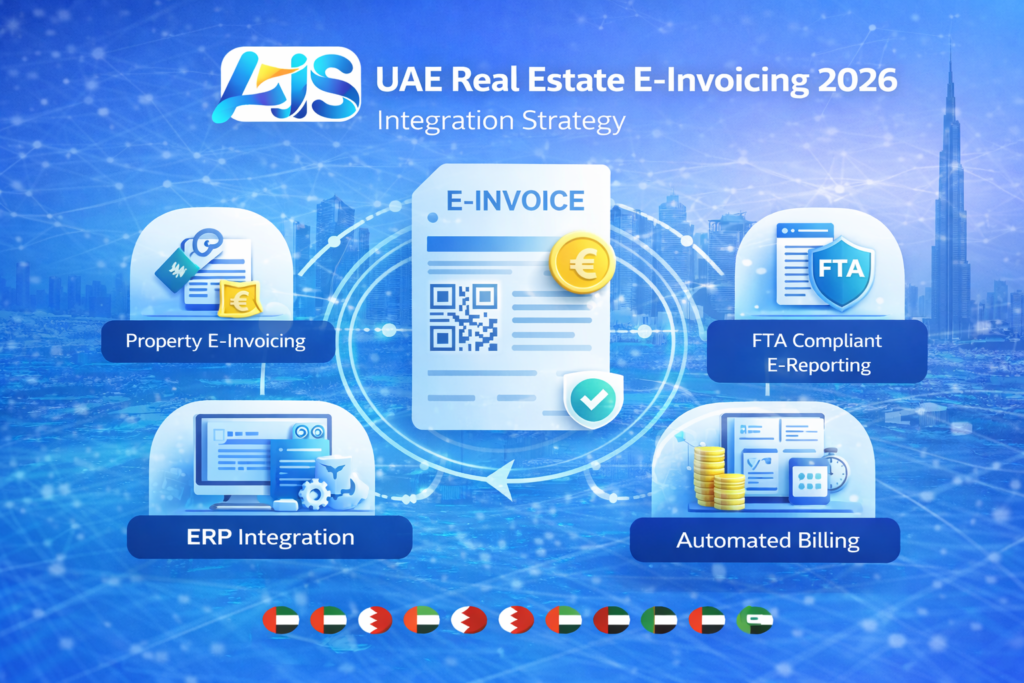
Types of Real Estate Transactions Covered by UAE E-Invoicing
Real estate businesses generate various financial documents that must comply with UAE e-invoicing real estate regulations.
| Transaction Type | Example |
| Property Sales | Developer selling residential units |
| Property Leasing | Monthly commercial rental invoices |
| Brokerage Fees | Agent commission billing |
| Property Management | Maintenance and management charges |
| Service Charges | Community or facility charges |
Companies implementing real estate e-invoicing UAE solutions ensure that all these invoices are generated digitally and stored securely.
Technology Architecture Behind UAE Real Estate E-Invoicing
Modern UAE e-invoicing for real estate businesses relies on integrated digital architecture.
Core Components
ERP / Accounting System
Handles transaction records and invoice creation.
Integration Layer
Connects ERP systems to the national e-invoicing network.
Compliance Validation Engine
Ensures invoices meet regulatory standards.
Secure Reporting Gateway
Transmits invoices to regulatory systems.
Simplified Architecture Flow
Property Transaction
↓
ERP / Accounting System
↓
E-Invoice Generation
↓
Compliance Validation
↓
Secure Reporting
↓
Digital Storage & Audit Trail
This architecture enables large real estate enterprises to automate invoice reporting across multiple emirates.
Challenges Real Estate Businesses Face Without E-Invoicing
Many property companies still rely on manual processes or fragmented accounting systems.
Common challenges include:
- Manual invoice preparation
- Delayed VAT reporting
- Reconciliation errors
- Limited financial transparency
- Compliance risks during audits
Implementing UAE e-invoice real estate automation systems eliminates these issues while improving operational efficiency.
Real Estate E-Invoicing Implementation Across UAE Cities
Real estate markets vary across emirates, but e-invoicing compliance applies nationwide.
Dubai
Dubai has the largest real estate ecosystem, including developers, brokers, and property management firms. Digital invoicing ensures fast transaction reporting for large-scale property developments.
Abu Dhabi
The capital’s real estate market includes government projects, commercial towers, and residential developments requiring accurate financial reporting and automated invoicing systems.
Sharjah
Growing residential developments make real estate e-invoicing UAE systems important for leasing and property management companies.
Ajman
Small and medium property developers benefit from automated invoicing and compliance reporting.
Ras Al Khaimah
Industrial and tourism real estate developments require structured financial reporting systems.
Fujairah
Expanding logistics and commercial property projects require digital billing systems.
Umm Al Quwain
Real estate growth is increasing demand for automated financial infrastructure.
Free Zones
Real estate transactions within free zones also require digitally compliant invoice documentation.
Key Compliance Requirements for Real Estate E-Invoicing
Real estate companies implementing UAE e-invoicing real estate systems must ensure that invoices contain the following elements.
| Compliance Element | Description |
| Unique Invoice Number | Identifies each transaction |
| VAT Registration Details | Mandatory tax information |
| Property Transaction Details | Unit, project, or service |
| Buyer Information | Customer identity |
| Timestamp | Digital invoice creation date |
These elements ensure that real estate e-invoice UAE systems meet FTA compliance standards.
ERP Integration for Real Estate E-Invoicing
Most large property developers operate using ERP platforms for financial management.
Integrating ERP systems with UAE e-invoicing real estate frameworks enables:
- Automated invoice creation
- Real-time tax reporting
- Integrated accounting workflows
- Secure digital storage
This integration ensures scalable financial automation for real estate portfolios across multiple emirates.
Automation Opportunities in Real Estate Financial Operations
Digital invoicing also unlocks automation opportunities.
Smart Contract Billing
Lease agreements automatically trigger invoice generation.
Commission Automation
Broker commission invoices are generated automatically.
Property Service Billing
Recurring maintenance invoices are automated monthly.
Portfolio Financial Reporting
Centralized dashboard for multi-property accounting.
These capabilities make UAE e-invoicing real estate systems essential for modern property enterprises.
Future of Digital Invoicing in UAE Real Estate
The UAE is positioning itself as a global leader in digital tax infrastructure.
Future developments may include:
- Fully automated invoice reporting
- Real-time tax compliance systems
- AI-driven financial analytics
- blockchain-based transaction verification
For property developers and brokerage firms, early adoption of UAE e-invoicing for real estate solutions ensures smoother compliance as regulations evolve.
Strategic Advantages of Early Adoption
Organizations that adopt real estate e-invoicing UAE systems early gain multiple advantages.
Operational Efficiency
Automated workflows reduce administrative effort.
Regulatory Readiness
Businesses remain prepared for evolving compliance regulations.
Financial Transparency
Digital reporting improves audit readiness.
Scalable Growth
Systems can handle increasing transaction volumes.
UAE e-invoicing real estate systems are transforming the way property businesses manage financial transactions, compliance reporting, and digital documentation. From property sales in Dubai to leasing operations in Abu Dhabi, Sharjah, Ajman, Ras Al Khaimah, Fujairah, and Umm Al Quwain, digital invoicing is becoming a foundational requirement for modern real estate companies.
By implementing structured UAE e-invoice real estate frameworks, organizations can automate financial workflows, enhance compliance transparency, and support long-term business scalability.
As the UAE continues its digital tax transformation journey, businesses that invest early in real estate e-invoicing UAE technologies will gain a significant operational advantage while maintaining seamless regulatory compliance.
FAQ – UAE Real Estate E-Invoicing
What is UAE e-invoicing for real estate?
UAE e-invoicing for real estate refers to the digital generation and reporting of invoices for property transactions such as sales, leases, and brokerage services.
Is e-invoicing mandatory for real estate businesses in UAE?
The UAE government is implementing national e-invoicing regulations that will require businesses, including real estate companies, to generate compliant digital invoices.
What transactions require real estate e-invoices?
Transactions include property sales, lease payments, brokerage commissions, service charges, and property management fees.
How does e-invoicing help real estate developers?
It improves financial transparency, automates billing processes, and ensures regulatory compliance.
Can ERP systems support UAE e-invoicing?
Yes, ERP platforms can integrate with digital invoicing frameworks to automate invoice generation and reporting.
Do property brokers need e-invoicing?
Yes, brokerage firms issuing commission invoices must ensure invoices follow digital compliance standards.
Does e-invoicing apply to leasing invoices?
Yes, rental invoices generated by property management companies must comply with digital invoicing regulations.
What are the benefits of e-invoicing for property management companies?
It improves billing efficiency, reduces manual errors, and ensures accurate tax reporting.
Are free zone real estate businesses required to comply?
Yes, real estate businesses operating in UAE free zones must also follow digital invoicing standards.
How can businesses prepare for UAE real estate e-invoicing?
Companies should assess their ERP systems, automate financial workflows, and ensure compliance with upcoming digital reporting requirements.
