


UAE e-invoicing for SMEs is becoming a key priority for small and medium-sized businesses as the United Arab Emirates continues to strengthen its digital tax infrastructure. With the government preparing to introduce a structured electronic invoicing framework, SMEs across Dubai, Abu Dhabi, Sharjah, Ajman, Ras Al Khaimah, Fujairah, Umm Al Quwain, and UAE freezones must start preparing for digital invoicing systems that automate billing, improve compliance, and enhance financial transparency.
For small businesses, adopting UAE electronic invoicing systems offers more than regulatory compliance. It enables faster invoicing processes, better financial management, improved customer payment cycles, and seamless integration with accounting or ERP systems. As the UAE moves toward a fully digital business ecosystem, SMEs that adopt e-invoicing solutions early will be better positioned to scale operations and maintain compliance with tax regulations.
This article explains how UAE e-invoicing for SMEs works, why it matters for small businesses, and how organizations can prepare for a smooth transition to digital invoicing.
Understanding UAE E-Invoicing
E-invoicing refers to the electronic generation, exchange, and storage of invoices in a structured digital format. Unlike traditional invoices sent as paper documents or PDFs, e-invoices are created in a standardized format that allows automated processing by accounting systems and regulatory platforms.
The UAE government is introducing an electronic invoicing ecosystem to improve financial transparency, streamline tax reporting, and reduce invoicing fraud. Through this system, invoices will be digitally transmitted between suppliers, buyers, and tax authorities using secure digital channels.
For SMEs, adopting UAE e-invoicing systems means moving away from manual invoicing processes and implementing automated digital invoicing tools that simplify financial operations.
Why UAE SMEs Need to Prepare for E-Invoicing?
Small and medium-sized enterprises form the backbone of the UAE economy. As digital tax systems become more common worldwide, businesses in the UAE must adopt electronic invoicing solutions to stay compliant and competitive.
Improved Regulatory Compliance
Electronic invoicing systems ensure invoices meet UAE tax regulations, reducing the risk of compliance errors.
Faster Invoice Processing
Digital invoices are generated instantly and delivered electronically, allowing businesses to receive payments faster.
Reduced Administrative Work
Automation eliminates manual invoice preparation, saving time and reducing operational costs.
Enhanced Financial Accuracy
Automated invoicing systems reduce errors in calculations and ensure accurate financial records.
Better Business Insights
E-invoicing platforms provide real-time financial reporting, helping SMEs monitor cash flow and financial performance.
By implementing digital invoicing early, SMEs can transform their financial processes while preparing for upcoming regulatory changes.
Key Features of UAE E-Invoicing Systems for SMEs
Modern UAE e-invoicing solutions offer several features that make invoicing easier for small businesses.
Automated Invoice Creation
Invoices can be generated automatically from accounting or ERP systems.
VAT-Compliant Tax Calculations
Systems automatically apply VAT calculations based on UAE tax rules.
Integration with Accounting Software
E-invoicing platforms integrate with common accounting tools used by SMEs.
Secure Digital Storage
Invoices are stored securely in cloud systems, ensuring easy access during audits.
Real-Time Invoice Tracking
Businesses can track invoice status and payment progress instantly.
These features allow SMEs to manage invoicing processes more efficiently.
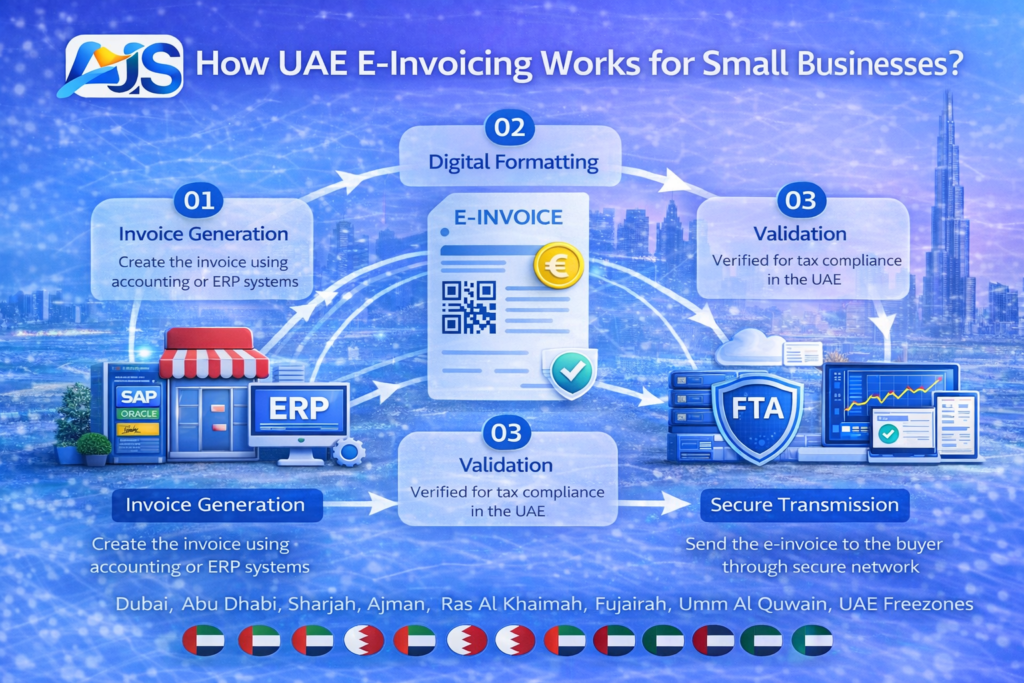
How UAE E-Invoicing Works for Small Businesses?
Implementing UAE e-invoicing for SMEs involves a simple digital workflow that automates invoice creation and delivery.
Step 1: Invoice Generation
The business creates an invoice using accounting software or ERP systems.
Step 2: Digital Formatting
The system converts invoice data into a structured electronic format.
Step 3: Validation
The invoice is validated according to UAE tax regulations.
Step 4: Secure Transmission
The invoice is transmitted electronically to the buyer through a digital invoicing network.
Step 5: Storage and Reporting
Invoices are stored securely and can be used for financial reporting and audits.
This automated workflow significantly reduces manual invoicing tasks.
Industries Where SMEs Benefit from E-Invoicing
Many industries with large numbers of SMEs can benefit from electronic invoicing systems.
Retail and E-Commerce
Retail businesses generate high volumes of invoices daily, making automation essential.
Construction
Contractors and subcontractors require structured invoicing for project payments.
Logistics and Transportation
Logistics companies exchange invoices frequently with partners and suppliers.
Professional Services
Consultants and agencies benefit from automated billing systems.
Equipment Rental and Leasing
Rental companies require recurring invoices and automated billing cycles.
Across these industries, UAE digital invoicing solutions improve efficiency and reduce operational challenges.
E-Invoicing Adoption Across UAE Cities
SMEs across the UAE are gradually adopting electronic invoicing systems.
Dubai
Startups and technology-driven SMEs in Dubai are rapidly implementing digital invoicing tools.
Abu Dhabi
Government initiatives supporting digital transformation encourage businesses to adopt automated invoicing systems.
Sharjah
Manufacturing and trading SMEs in Sharjah are integrating invoicing with ERP platforms.
Ajman
Small trading companies are implementing cloud-based accounting and invoicing systems.
Ras Al Khaimah
Industrial SMEs are adopting structured digital invoicing to manage supplier transactions.
Fujairah
Logistics and shipping businesses require automated invoice exchange systems.
Umm Al Quwain
Small enterprises are increasingly shifting toward cloud-based financial systems.
SMEs in UAE freezones are also preparing for digital invoicing frameworks to maintain compliance.
Choosing the Right UAE E-Invoicing Solution for SMEs
Selecting the right e-invoicing system is crucial for successful implementation.
Ease of Use
Small businesses require simple and user-friendly invoicing platforms.
Integration Capability
The system should integrate easily with existing accounting software.
Compliance Support
The solution must align with UAE tax and invoicing regulations.
Scalability
The platform should support business growth and increased invoice volumes.
Data Security
Secure data transmission and encrypted storage are essential for financial records.
By evaluating these factors, SMEs can choose a reliable UAE e-invoicing solution provider.
Challenges SMEs May Face During E-Invoicing Implementation
While e-invoicing offers significant benefits, SMEs may encounter challenges during implementation.
System Integration
Businesses may need technical support to integrate invoicing systems with accounting platforms.
Employee Training
Finance teams must learn new digital invoicing workflows.
Compliance Updates
Businesses must stay informed about regulatory requirements.
Technology Investment
Some SMEs may need to upgrade existing financial systems.
However, these challenges can be minimized by working with experienced e-invoicing solution providers.
The Future of E-Invoicing for SMEs in the UAE
The UAE continues to invest in digital transformation and advanced tax infrastructure. Over the next few years, electronic invoicing systems are expected to become standard practice across industries.
Future developments may include:
• Real-time tax reporting
• AI-driven invoice validation
• Automated financial analytics
• Seamless cross-border invoicing
• Integration with government platforms
SMEs that adopt UAE electronic invoicing systems early will benefit from improved efficiency, better financial management, and full compliance with digital tax regulations.
The transition to UAE e-invoicing for SMEs represents a major milestone in the country’s digital economic transformation. Small businesses across Dubai, Abu Dhabi, Sharjah, Ajman, Ras Al Khaimah, Fujairah, Umm Al Quwain, and UAE freezones must begin preparing for electronic invoicing systems that automate billing and improve financial transparency.
By implementing the right UAE e-invoicing solution, SMEs can streamline invoicing operations, ensure regulatory compliance, and improve overall business efficiency. As digital invoicing becomes the standard for modern businesses, early adoption will help SMEs remain competitive in the evolving UAE business landscape.
Frequently Asked Questions (FAQs)
What is UAE e-invoicing for SMEs?
UAE e-invoicing for SMEs refers to the digital creation, transmission, and storage of invoices using electronic invoicing systems.
Why is e-invoicing important for small businesses in the UAE?
E-invoicing helps SMEs automate billing processes, reduce errors, and comply with tax regulations.
Is e-invoicing mandatory in the UAE?
The UAE government is preparing to introduce a national electronic invoicing framework that businesses will need to adopt.
How can SMEs implement e-invoicing systems?
SMEs can implement digital invoicing by adopting cloud-based invoicing software or integrating invoicing with ERP systems.
Can e-invoicing integrate with accounting software?
Yes, most e-invoicing platforms integrate with accounting systems and ERP software.
Are UAE freezone companies required to adopt e-invoicing?
Freezone businesses involved in taxable transactions may need to adopt compliant invoicing systems.
What industries benefit the most from e-invoicing?
Retail, logistics, construction, professional services, and equipment rental businesses benefit greatly.
Is e-invoicing secure?
Yes, modern e-invoicing systems use encrypted data transmission and secure cloud storage.
How long does e-invoicing implementation take?
Implementation timelines depend on system integration requirements and business size.
How can SMEs choose the best e-invoicing provider?
SMEs should evaluate integration capabilities, compliance support, scalability, and security features before selecting a provider.
