


UAE e-invoicing 2026 is becoming one of the most significant digital tax reforms that businesses across the United Arab Emirates must prepare for. The government is introducing a nationwide electronic invoicing framework to modernize VAT reporting, improve financial transparency, and streamline tax compliance across industries.
From large enterprises in Dubai and Abu Dhabi to SMEs in Sharjah, Ajman, Ras Al Khaimah, Fujairah, and Umm Al Quwain, companies will soon transition from traditional invoicing methods to a fully digital system that allows invoices to be generated, validated, transmitted, and stored electronically.
The initiative is part of the UAE’s broader digital transformation strategy aimed at improving regulatory efficiency, reducing fraud, and enabling automated tax reporting. Businesses operating in mainland UAE and free zones will need to ensure that their invoicing systems are compatible with the upcoming e-invoicing infrastructure.
For organizations that prepare early, the transition to digital invoicing will not only ensure compliance but also unlock benefits such as faster payments, better financial visibility, and streamlined business operations.
This comprehensive guide explains the latest UAE e-invoicing updates, the expected rollout timeline, compliance requirements, and the steps businesses should take to prepare for the new digital invoicing ecosystem.
What is UAE E-Invoicing?
UAE e-invoicing refers to the electronic creation, exchange, validation, and storage of invoices in a structured digital format that allows automated processing between businesses and government systems.
Unlike traditional invoices that are shared as PDFs or paper documents, e-invoices are created in machine-readable formats that allow systems to automatically process and validate transaction data.
Key characteristics of electronic invoicing include:
• Structured digital invoice formats
• Automated invoice validation
• Secure electronic transmission
• Integration with ERP and accounting systems
• Digital storage and archiving
The UAE government is introducing this system to ensure that invoice data can be securely exchanged between trading partners and tax authorities.
Why the UAE is Introducing E-Invoicing?
Governments worldwide are adopting e-invoicing to enhance tax transparency and improve financial reporting. The UAE is following a similar path as part of its strategy to build a digitally advanced economy.
Several factors are driving the adoption of e-invoicing in the UAE.
1. Strengthening VAT Compliance
The digital invoicing system will allow authorities to monitor transactions more effectively and reduce errors in VAT reporting.
2. Reducing Fraud and Tax Evasion
Automated invoice validation ensures that fraudulent invoices are detected early.
3. Enhancing Business Efficiency
Automation reduces manual data entry, minimizing errors and administrative workload.
4. Supporting Digital Transformation
E-invoicing aligns with the UAE’s broader vision of becoming a global leader in digital governance and smart services.
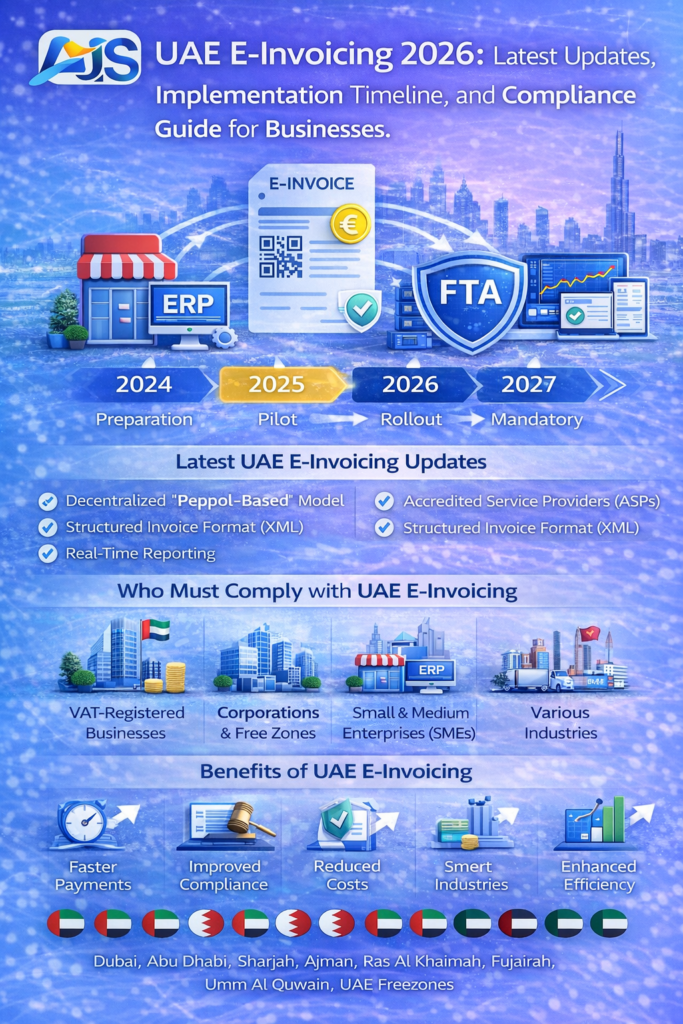
Latest UAE E-Invoicing Updates
The UAE government has been actively developing the regulatory framework and technical infrastructure required for the nationwide implementation of e-invoicing.
Here are the latest developments businesses should be aware of.
Introduction of a Decentralized Model
The UAE plans to adopt a decentralized “Peppol-based” model that enables businesses to exchange invoices through accredited service providers.
This model allows secure data exchange without requiring businesses to connect directly to a central government platform.
Use of Accredited Service Providers
Companies will connect to the national e-invoicing network through approved service providers who facilitate invoice validation and transmission.
Structured Data Standards
Invoices must be issued in machine-readable formats that allow automated processing.
Secure Digital Infrastructure
The system will ensure that invoice data is transmitted securely and stored in compliance with regulatory requirements.
UAE E-Invoicing Implementation Timeline
Understanding the expected rollout timeline is critical for businesses planning their compliance strategy.
Preparation Phase
Businesses are currently in the preparation stage where they must review their invoicing systems and assess whether they are compatible with structured digital invoices.
Organizations are encouraged to evaluate their ERP and accounting platforms and begin exploring e-invoicing solutions.
Pilot Phase – 2026
The UAE is expected to launch pilot programs to test the e-invoicing infrastructure with selected businesses.
This phase will help authorities refine technical standards and ensure the system operates efficiently.
Gradual Rollout – 2026 to 2027
Mandatory implementation will likely occur in stages, beginning with large enterprises and gradually expanding to SMEs and other businesses.
Companies that begin preparing early will have a smoother transition.
Who Must Comply With UAE E-Invoicing?
The upcoming regulations will affect a wide range of organizations operating in the UAE.
Businesses that may need to comply include:
• VAT-registered companies
• Corporations operating in mainland UAE
• Businesses in free zones
• SMEs issuing tax invoices
• Multinational companies with UAE operations
Industries expected to adopt e-invoicing include retail, logistics, construction, manufacturing, technology, equipment rental, and professional services.
How UAE E-Invoicing Works?
The digital invoicing process involves several key steps.
1. Invoice Generation
The business creates an invoice using ERP or accounting software.
2. Invoice Validation
The invoice is validated through an accredited service provider to ensure compliance with regulatory standards.
3. Invoice Transmission
The validated invoice is securely transmitted to the buyer through the e-invoicing network.
4. Reporting and Archiving
Invoice data is stored digitally for compliance and audit purposes.
This automated workflow eliminates manual invoicing processes and improves efficiency.
Benefits of UAE E-Invoicing for Businesses
Although compliance is mandatory, businesses will benefit significantly from digital invoicing.
Faster Payment Processing
Automated invoicing speeds up the approval and payment process.
Improved Accuracy
Structured data reduces errors caused by manual data entry.
Enhanced Tax Compliance
Businesses can ensure that VAT reporting is accurate and consistent.
Cost Reduction
Automation reduces administrative costs associated with manual invoicing.
Better Financial Insights
Digital invoices allow businesses to analyze transaction data and improve financial planning.
Preparing Your Business for UAE E-Invoicing
Businesses should begin preparing now to avoid disruptions once the system becomes mandatory.
Upgrade Accounting Systems
Companies should ensure their accounting software supports structured e-invoices.
Integrate ERP Systems
ERP integration will enable automated invoice processing.
Choose an E-Invoicing Solution
Selecting the right technology partner will ensure compliance and smooth integration.
Train Finance Teams
Employees must understand the new digital invoicing workflow.
Maintain Accurate Data
Structured invoices require consistent and accurate data fields.
UAE Cities and Free Zones Preparing for E-Invoicing
Businesses across the UAE must prepare for the digital invoicing transition.
Major business hubs include:
Dubai
Abu Dhabi
Sharjah
Ajman
Ras Al Khaimah
Fujairah
Umm Al Quwain
Free zones that may be affected include:
DMCC
JAFZA
Dubai Silicon Oasis
Abu Dhabi Global Market
Sharjah Airport Free Zone
Companies operating in these regions must ensure compliance with national e-invoicing regulations.
Challenges Businesses May Face
While the benefits are clear, businesses may face several challenges during implementation.
Technology Upgrades
Older accounting systems may not support structured invoices.
Integration Complexity
Connecting ERP systems with e-invoicing networks may require technical expertise.
Change Management
Employees must adapt to new digital processes.
Compliance Monitoring
Businesses must continuously ensure their systems meet regulatory requirements.
Working with experienced e-invoicing providers can help overcome these challenges.
Future of Digital Tax Compliance in the UAE
E-invoicing is only the beginning of a broader transformation toward digital taxation.
Future developments may include:
• Automated tax reporting
• Real-time transaction monitoring
• AI-driven compliance tools
• Integrated financial reporting systems
These innovations will create a more efficient and transparent tax ecosystem in the UAE.
The introduction of UAE e-invoicing in 2026 represents a major step in the country’s digital transformation journey.
Businesses across Dubai, Abu Dhabi, Sharjah, Ajman, Ras Al Khaimah, Fujairah, Umm Al Quwain, and UAE free zones must begin preparing now to ensure a smooth transition to digital invoicing.
Organizations that upgrade their systems, train their teams, and adopt compliant e-invoicing solutions early will gain significant advantages in efficiency, compliance, and financial transparency.
By embracing digital invoicing today, businesses can position themselves for success in the UAE’s evolving digital economy.
Frequently Asked Questions
What is UAE e-invoicing?
UAE e-invoicing is a system where invoices are generated, transmitted, and stored electronically in structured digital formats.
When will UAE e-invoicing become mandatory?
The rollout is expected to begin in 2026, with gradual mandatory implementation afterward.
Who must comply with UAE e-invoicing regulations?
Most VAT-registered businesses operating in the UAE will need to comply.
Will SMEs need to implement e-invoicing?
Yes, SMEs will eventually be required to adopt electronic invoicing systems.
Does UAE e-invoicing apply to free zone companies?
Yes, companies operating in free zones will also be affected by the regulations.
What format will e-invoices use?
Invoices will be issued in structured digital formats such as XML or other machine-readable standards.
What are accredited service providers?
They are approved organizations that facilitate secure invoice transmission between businesses.
What are the benefits of e-invoicing?
Benefits include improved compliance, faster processing, reduced costs, and better financial visibility.
Can existing accounting systems support e-invoicing?
Some systems may require upgrades or connectors to meet compliance requirements.
How can businesses prepare for UAE e-invoicing?
Businesses should upgrade their invoicing systems, integrate ERP platforms, and adopt compliant e-invoicing solutions.
