

The UAE is entering a new era of digital tax compliance. Starting 2026, electronic invoicing will become mandatory under a structured framework aligned with international standards. For small businesses and SMEs, this is not just a regulatory update; it is a transformation in how invoices are created, transmitted, validated, and archived.
If you are a small business owner in the UAE, this guide explains:
- What UAE e-invoicing 2026 means for SMEs?
- Who must comply and when?
- How the PEPPOL-based model works?
- What software small businesses should use?
- Step-by-step implementation roadmap
- Cost considerations
- Compliance checklist
- Common mistakes to avoid
This article is designed to help SMEs prepare early, reduce compliance risk, and ensure smooth adoption.
What is UAE E-Invoicing 2026?
UAE e-invoicing 2026 refers to the mandatory requirement for businesses to issue structured electronic invoices in a standardized XML format through an approved digital network.
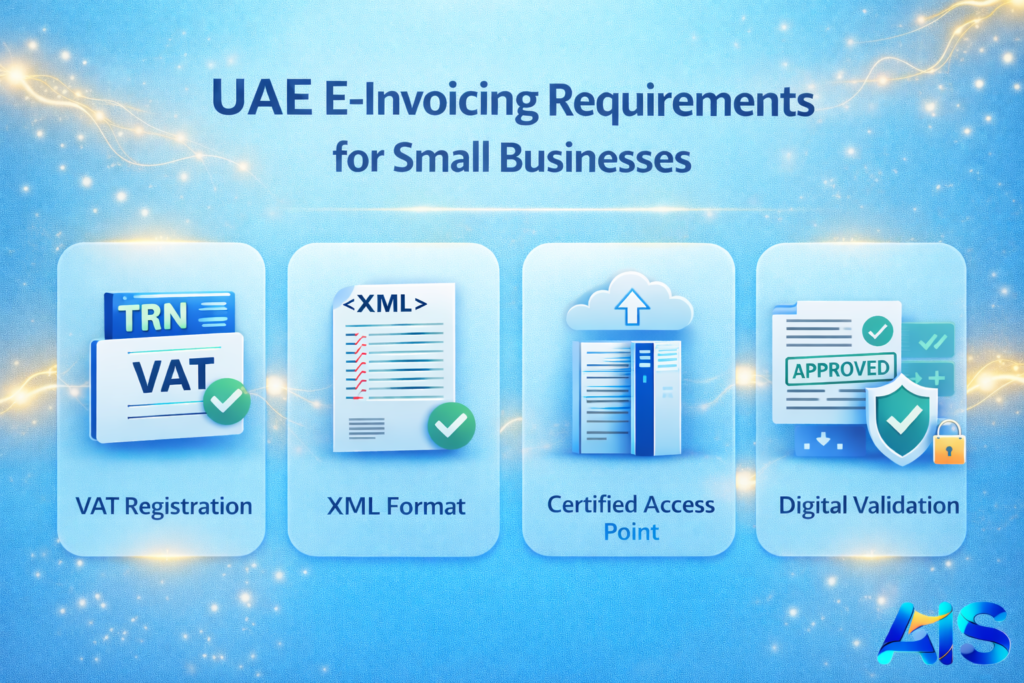
Unlike PDF invoices or manually generated bills, e-invoices must:
- Be generated in a structured data format
- Follow government-approved specifications
- Be transmitted via certified service providers
- Be validated digitally
- Be securely archived
This ensures transparency, reduces VAT fraud, and improves tax reporting efficiency.
Will Small Businesses Be Affected?
Yes.
Small businesses registered for VAT in the UAE will be required to comply with the e-invoicing mandate once it becomes applicable to their category.
If your business:
- Is VAT registered?
- Issues B2B invoices?
- Supplies goods or services in the UAE?
You will likely fall under the mandate phase applicable to SMEs.
Even if your turnover is modest, compliance will be required if VAT registration applies.
Why UAE introducing E-Invoicing?
The UAE government aims to:
- Enhance VAT compliance
- Reduce tax evasion
- Automate tax reporting
- Improve transparency
- Align with global digital tax frameworks
Countries across Europe, Asia, and Latin America have already implemented structured e-invoicing. The UAE is adopting a PEPPOL-aligned model to ensure interoperability and future scalability.
How the UAE E-Invoicing System Works for SMEs?
The UAE is implementing a 5-corner PEPPOL-based model.
Basic Invoice Flow:
- SME creates invoice in accounting software
- Invoice is converted into structured XML format
- Invoice is sent to a certified access point
- Invoice undergoes digital validation
- Invoice is delivered to buyer
- Status is recorded and archived
For small businesses, this process should feel automated if the right software is used.
What Changes for Small Businesses in 2026?
1. PDF Invoices Will Not Be Enough
Sending PDF invoices via email will not meet compliance requirements.
Invoices must be:
- Structured
- Digitally validated
- Transmitted via approved channels
2. Software Upgrade May Be Required
If your current accounting software:
- Does not generate XML?
- Does not connect to certified providers?
- Does not support structured e-invoices?
You may need to upgrade.
3. Manual Record-Keeping Will Be Risky
Manual invoice tracking increases:
- Rejection risk
- Audit exposure
- VAT errors
Automation will become necessary.
What Software Should SMEs Use?
Small businesses have three main options:
Option 1: Cloud Accounting Software with Built-In E-Invoicing
Best for micro and small enterprises.
Examples include:
- Cloud ERP platforms
- SME accounting systems
- VAT-compliant invoicing software
Advantages:
- Affordable
- Easy implementation
- Minimal IT setup
- Automated updates
Option 2: ERP-Based Systems
For growing SMEs using:
- SAP Business One
- Oracle NetSuite
- Microsoft Dynamics
These systems can integrate with e-invoicing frameworks through configuration and middleware.
Option 3: Certified E-Invoicing Service Providers
SMEs can use third-party platforms that:
- Convert invoices to XML
- Validate compliance
- Transmit through approved network
- Archive invoices securely
This is ideal for businesses without internal IT teams.
Step-by-Step SME Implementation Roadmap
Step 1: Check VAT Registration Status
Ensure your TRN is valid and updated.
Step 2: Review Current Invoice Process
Identify:
- Software used
- Manual steps
- Data gaps
- VAT calculation accuracy
Step 3: Choose E-Invoicing Solution
Select:
- Cloud accounting with built-in compliance
OR - ERP integration
OR - Certified provider platform
Step 4: Update Master Data
Ensure accurate:
- VAT numbers
- Customer information
- Product tax codes
- Address details
Incorrect master data is the biggest cause of invoice rejection.
Step 5: Test Before Mandate Phase
- Generate sample invoices
- Validate XML
- Simulate transmission
- Review error handling
Step 6: Train Staff
Educate accounting teams on:
- New invoice workflow
- Rejection handling
- Compliance tracking
Cost of E-Invoicing for Small Businesses
Costs vary based on solution type.
Cloud Accounting Upgrade:
Low to moderate monthly subscription.
ERP Integration:
Medium to high one-time implementation cost.
Service Provider Model:
Per-invoice transaction fee or subscription.
However, benefits often outweigh costs due to:
- Reduced paper expenses
- Faster payments
- Fewer manual errors
- Improved audit readiness
Benefits of E-Invoicing for SMEs
Beyond compliance, e-invoicing offers:
- Faster invoice processing
- Improved cash flow
- Reduced errors
- Automated VAT reporting
- Better financial visibility
- Stronger business credibility
Digital invoices reduce disputes and enhance transparency.
Common Mistakes Small Businesses Should Avoid
1. Waiting Until Deadline
Late implementation creates:
- Higher consultant fees
- Operational stress
- Compliance risk
2. Ignoring Master Data Accuracy
Missing TRN or incorrect VAT rates cause rejection.
3. Using Non-Compliant Software
Ensure your software is compatible with UAE requirements.
4. Underestimating Testing Phase
Testing ensures a smooth go-live.
Compliance Checklist for SMEs
Use this checklist to assess readiness:
✔ VAT registration verified
✔ Accounting software reviewed
✔ XML capability confirmed
✔ Certified provider selected
✔ Master data cleaned
✔ Testing completed
✔ Staff trained
✔ Archiving process established
Will Small Businesses Face Penalties?
Non-compliance may result in:
- Fines
- VAT reporting issues
- Rejected invoices
- Delayed payments
Early preparation reduces risk.
Frequently Asked Questions
Is UAE e-invoicing mandatory for small businesses?
Yes, VAT-registered small businesses will be required to comply with the UAE e-invoicing mandate once applicable to their category.
Can SMEs continue sending PDF invoices?
No. Structured XML-based electronic invoices will replace simple PDF invoices for compliance.
Do small businesses need ERP systems?
Not necessarily. Cloud accounting software with built-in e-invoicing functionality is sufficient for many SMEs.
How much does e-invoicing cost for SMEs?
Costs vary depending on software choice, but cloud-based solutions are generally affordable for small businesses.
What happens if an invoice is rejected?
The system will notify the business, corrections must be made, and the invoice resubmitted.
When should SMEs start preparing?
Preparation should begin at least 12–18 months before enforcement deadlines.
Is training required?
Yes. Accounting teams must understand new workflows and validation processes.
Does e-invoicing replace VAT returns?
No. VAT returns remain mandatory, but e-invoicing supports automated reporting.
Is digital signature required?
Depending on final regulatory specifications, digital validation mechanisms will apply.
What is the biggest risk for SMEs?
Delaying implementation and relying on manual processes.
Future Impact on Small Businesses
E-invoicing will:
- Digitize financial operations
- Improve compliance culture
- Encourage automation
- Increase transparency
SMEs that adopt early will gain a competitive advantage.
UAE E-Invoicing 2026 is a major compliance milestone for small businesses. While the mandate introduces technical requirements, it also provides an opportunity to modernize financial operations.
Small businesses that:
- Upgrade their accounting systems
- Automate invoice workflows
- Ensure VAT accuracy
- Test early
Will transition smoothly and avoid compliance risks.
Preparation today ensures stability tomorrow.

